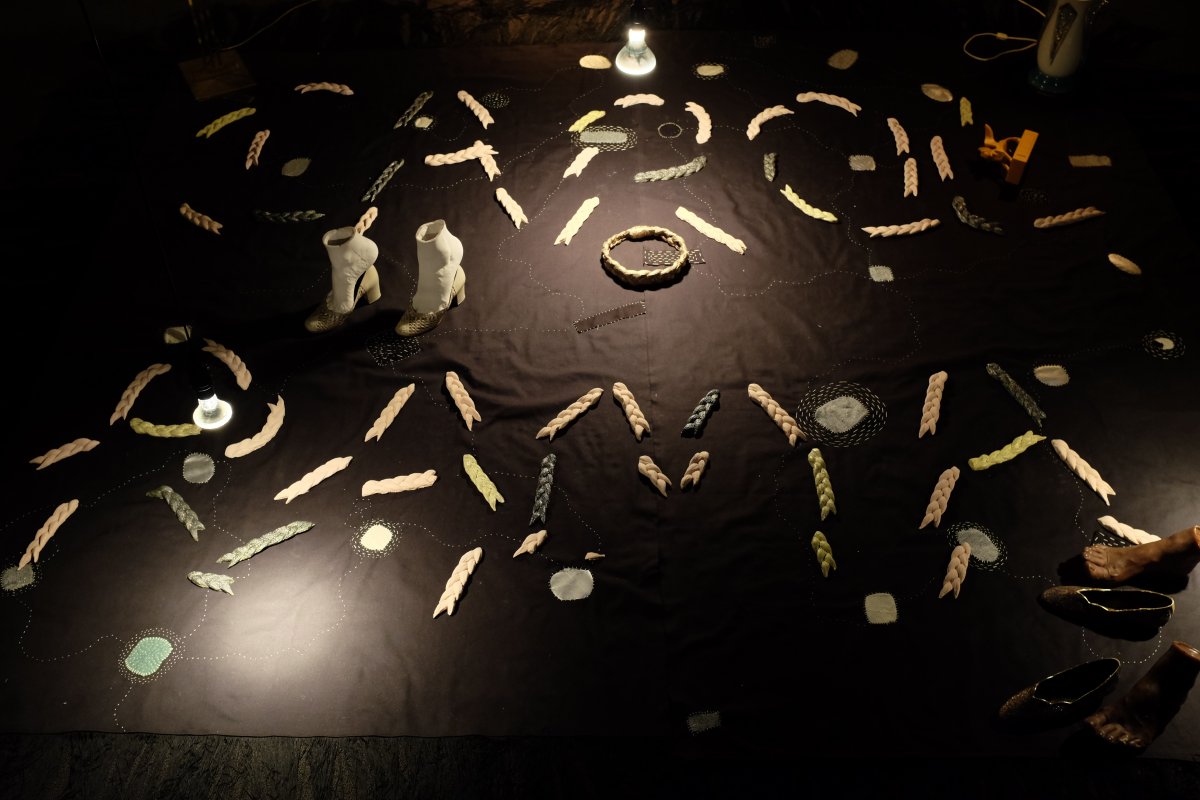
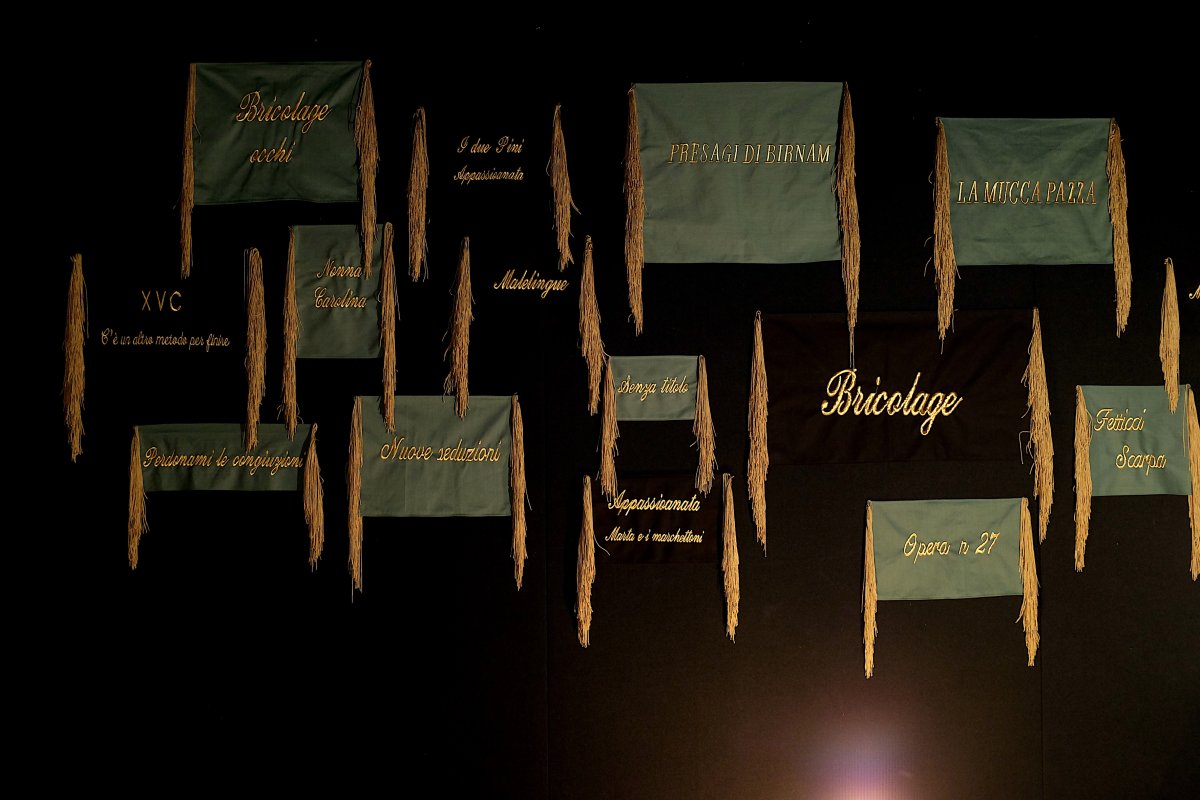
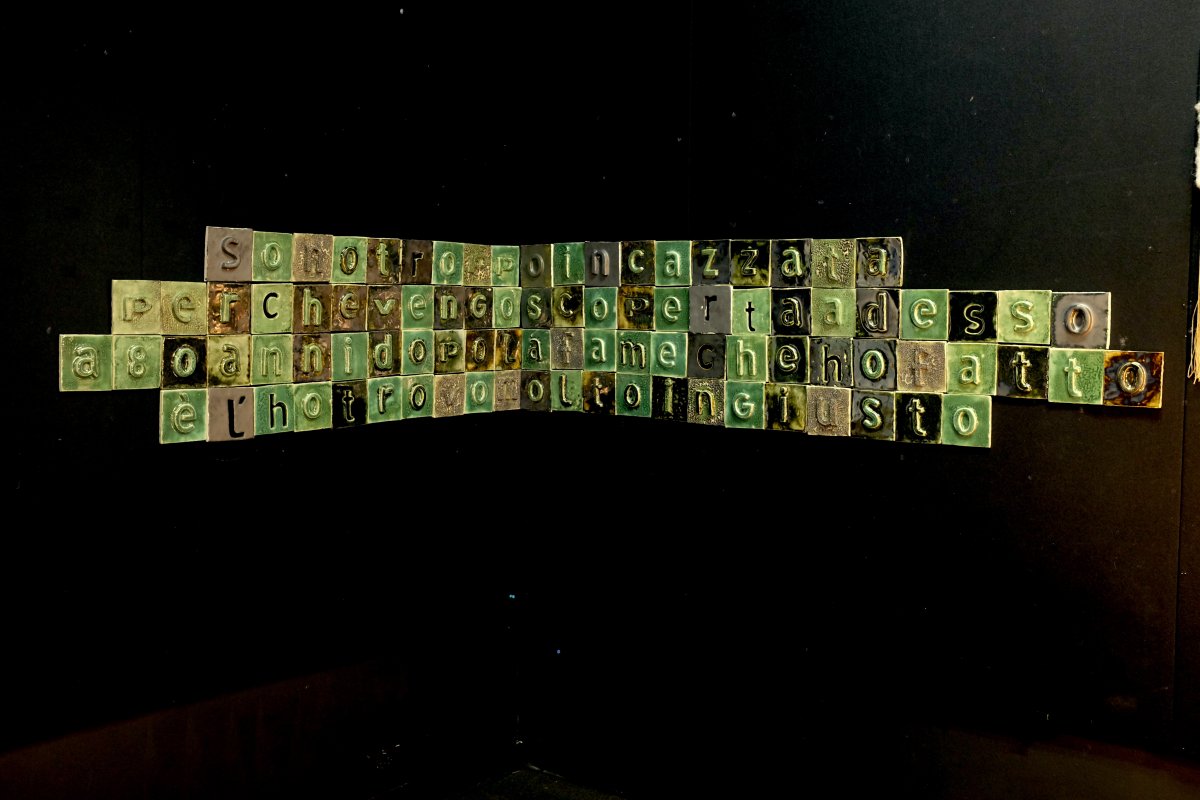
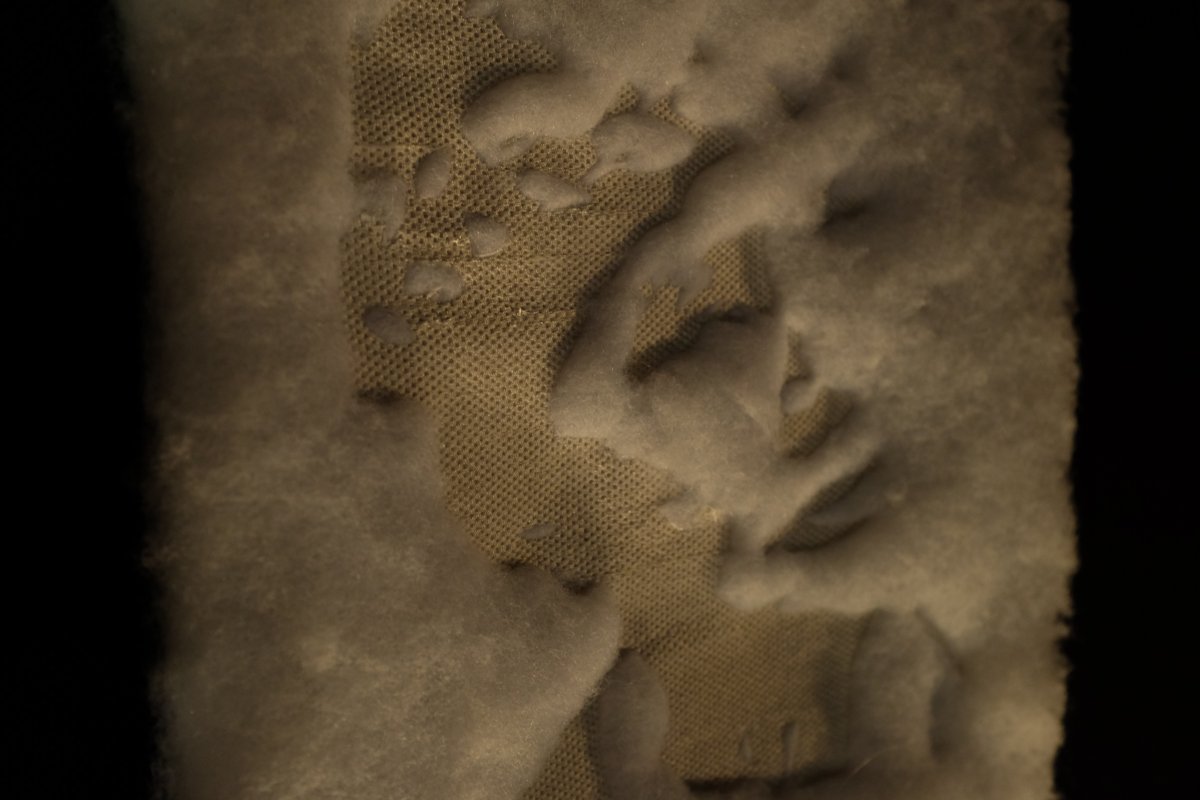
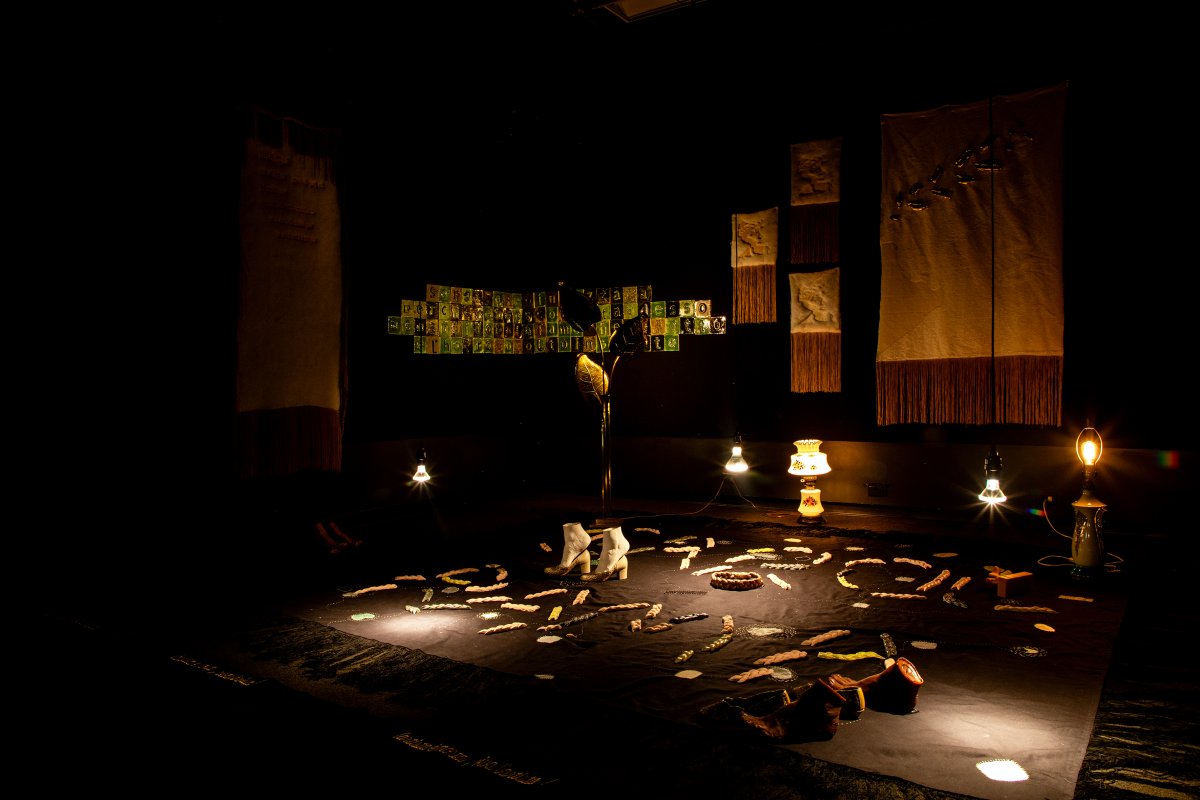
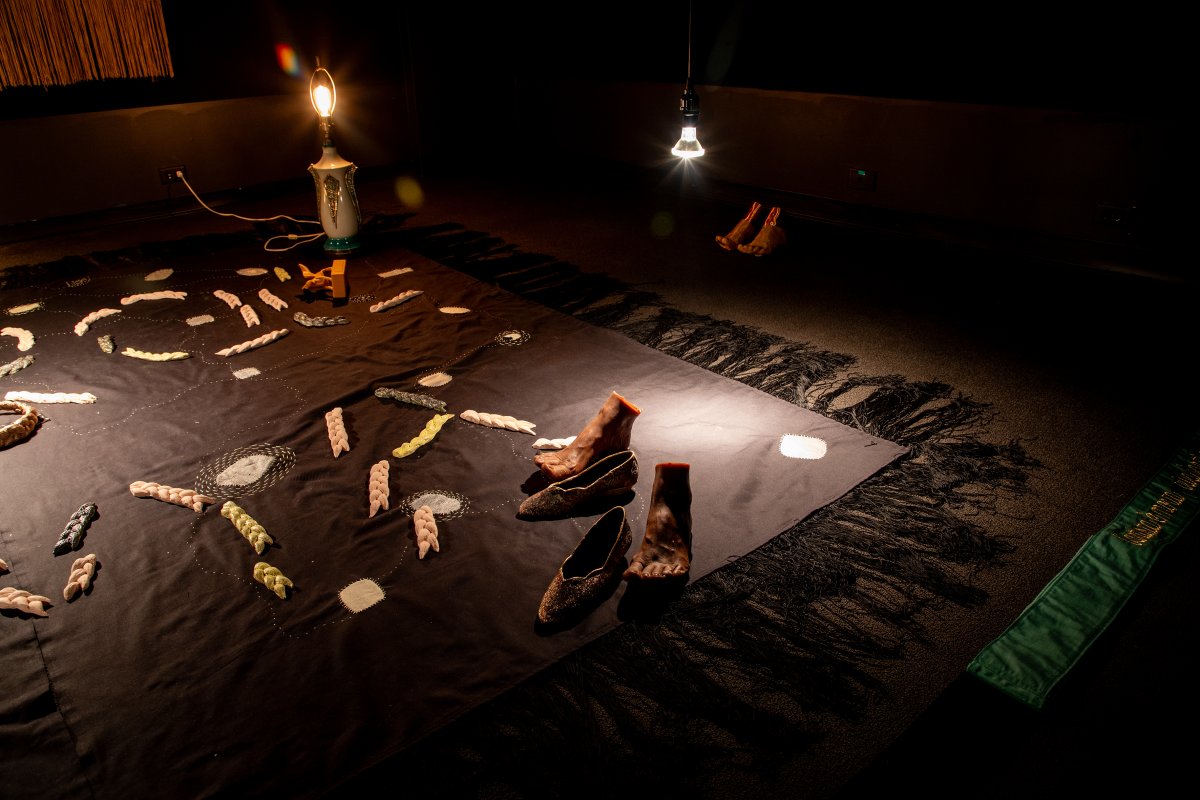
In alla ricerca di Carol Rama (searching for Carol Rama), I play the role of a detective tracking down the Italian artist Carol Rama, born in 1918 and who died in 2015 in Turin, Italy. Self-taught and unconventional, she was largely ignored by the art world until she turned 80; « I’m so angry because I’m being found out now, at the age of 80, after all the hunger I’ve endured. I find it very unfair, I find it very unfair, I find it very, very unfair. » (« Sono molto incazzata perche vengo scoperta soltanto oggi dopo la fame chez ho fatto e l’ho trovo molto inguisto, molto ingiusto, l’ho trovo molto ingiusto. »). What happened? What were the circumstances behind her marginalization? Is a structural dynamic of exclusion at work? How does invisibility operate, and how is it perpetuated?

vue d’installation/installation view (Concordia University), 2026 Photo/pic Prune Paycha

Dans alla ricerca di Carol Rama (à la recherche de Carol Rama), je joue le rôle de détective suivant les traces de l’artiste italienne Carol Rama née en 1918, décédée en 2015 à Turin, Italie. Autodidacte, non-conventionnelle, le monde de l’art l’a boudée jusqu’à l’âge de 80 ans; « Je suis très en colère parce que l’on me découvre seulement aujourd’hui, à l’âge de 80 ans, après la faim que j’ai endurée, et je trouve ça très injuste, très injuste, je trouve ça très injuste. » (« Sono molto incazzata perche vengo scoperta soltanto oggi dopo la fame chez ho fatto e l’ho trovo molto inguisto, molto ingiusto, l’ho trovo molto ingiusto. »). Que s’est-il passé ? Quelles ont été les conditions de cette mise à l’écart ? Une dynamique structurelle d’exclusion est-elle à l’œuvre ? Comment l’invisibilité s’opère-t-elle, s’entretient-elle ?

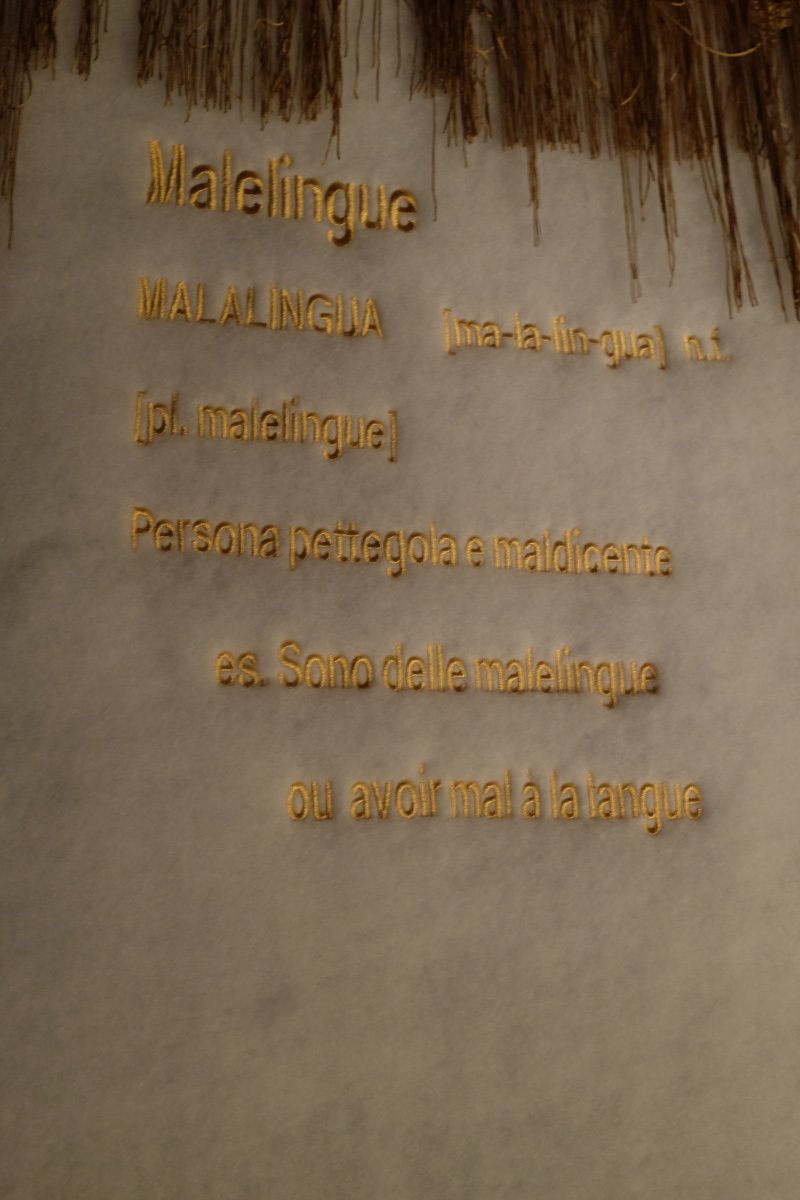
Malelingue  : Réalisé et monté pour 10 enceintes par le compositeur Ivan Pisino/ directed and edited for 10 speakers by composer Ivan Pisino, 2026

0:00s

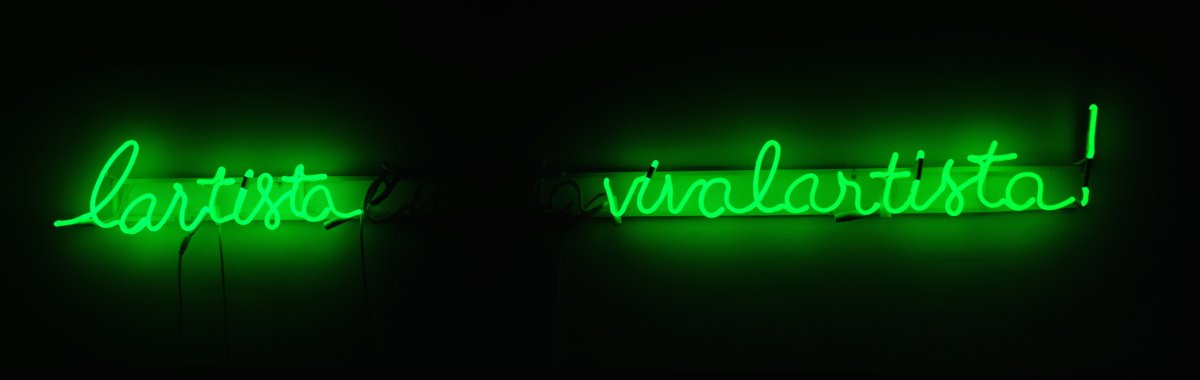
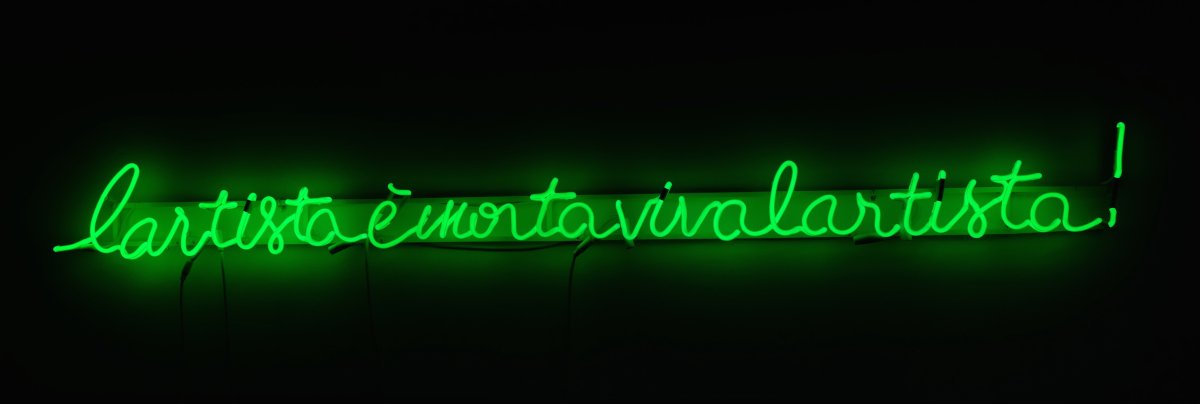
lartistaèmortavivalartista! premier exemplaire, neon vert clignotant/ first copy, green blinking, 200×13 cm Ø 10mm, 2021

Le néon « lartistaèmortavivalartista! » (lartiste est morte vive lartiste!) au message clignotant emprunte la figure de style scandée par le peuple à la mort des monarques, « Le Roi est mort, vive le Roi ! ». Il raconte l’inéluctable, la reproduction de l’artiste invisible invisibilisée de son vivant dont le travail ornera les salles des musées, galeries, collections après sa mort. Ces murs portent les traces de cette histoire collective – l’artiste ignorée se meurt et l’histoire se répète.

The neon ‘lartistaèmortavivalartista!’ (the artist is dead, long live the artist!) with its blinking message borrows the phrase chanted by the people at the death of monarchs: ‘The king is dead, long live the king! It tells the inescapable story of how the invisible artist, invisible in her lifetime, whose works will adorn museums, galleries and collections after her death, reproduced itself. These walls bear the traces of this collective history – the ignored artist dies and history repeats itself.

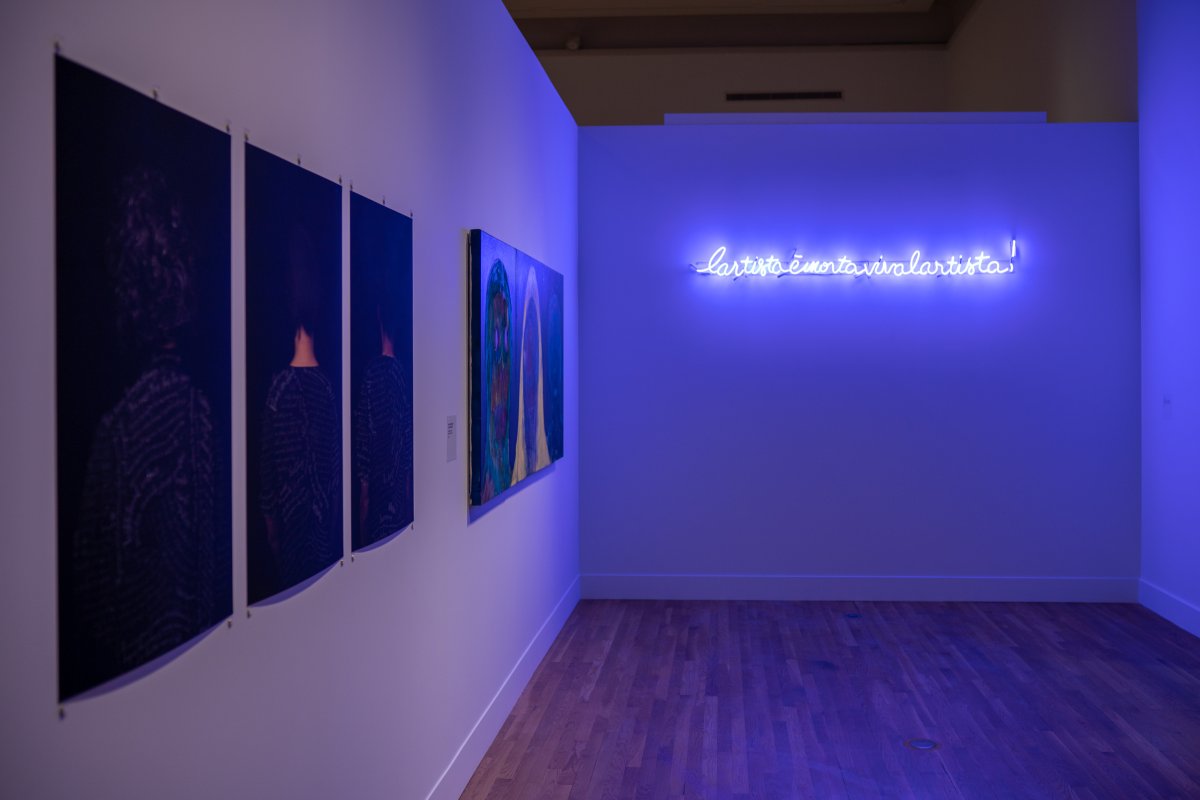
lartistaèmortavivalartista! Blinking purple neon, 200x13x10øcm

Le second exemplaire couleur pourpre a été présenté au Musée des Beaux-Arts de Montréal en 2022 dans le cadre d’une exposition/installation/performance portant sur la critique institutionnelle sous la curation de l’artiste Stanley Février dans le cadre de son projet : Le Musée d’art actuel / Département des invisibles (MAADI)

The second exemplar in purple has been presented at the Montreal Museum of Fine Arts in 2022 as part of an exhibition/installation/performance curated by artist Stanley Février as part of his project: Museum of the Art of Today / Department of the Invisible (MAADI).
Recherche